Curatorial
Testaments to the Beautyful Ones
Guest curator
Museum of Contemporary Photography at Columbia College Chicago
January–May 2027
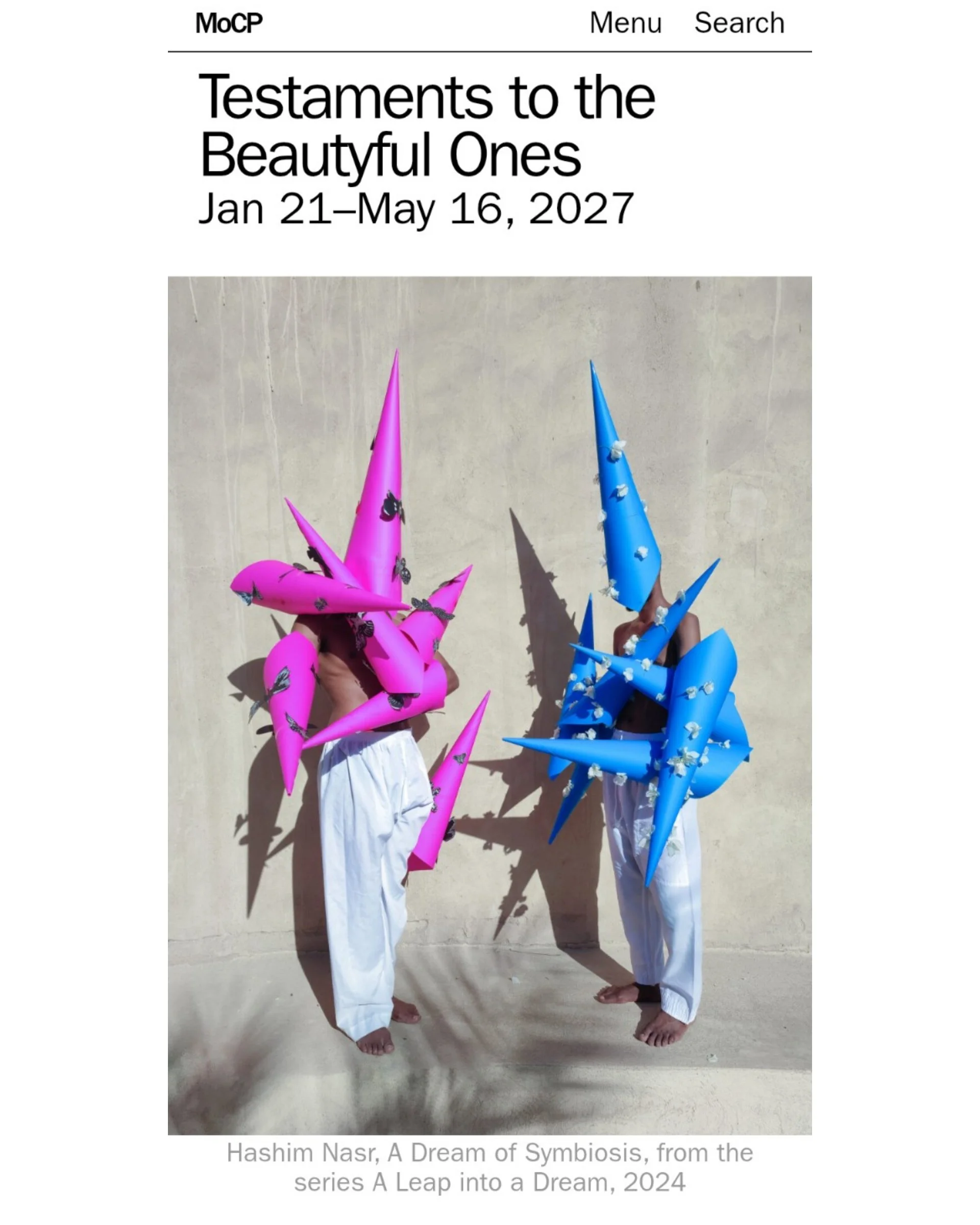
Testaments to the Beautyful Ones brings together eight photographers and six writers to bear witness and pay tribute to the unflinching insistences on life on the African continent. Situated within the discursive tensions between the enduring postcolonial disappointments registered in Ayi Kwei Armah’s iconic 1968 novel The Beautyful Ones Are Not Yet Born and the assertive hopefulness of Njideka Akunyili Crosby’s series of photographic transfer-based paintings The Beautyful Ones, this exhibition foregrounds how communities are carving out spaces of quiet possibility for themselves within the constraints of everyday living, particularly on social media.
Photographs by Tatenda Chidora, Fatoumata Diabaté, Yagazie Emezi, Zana Masombuka, Sackitey Tesa Mate-Kodjo, Hashim Nasr, Jean-Louis N’cho and Sarah Waiswa are presented in clusters, staging conversations about pressing concerns such as gender and sexuality; spirituality; war and displacement; self-representation; and people’s relationships to the natural world, to museum spaces, to the Covid pandemic, to waste and found objects, and to dreams. Newly commissioned texts in response to the clusters by Kweku Abimbola, TJ Benson, Safia Elhillo, Tsitsi Jaji, Cheswayo Mphanza and Ladan Osman further testify to these renewed manifestations of the “beautyful ones”, which Armah explains, as a misspelling of the praise name for the ancient Egyptian god Osiris that he saw painted on a minibus taxi in Accra, is paradoxically “a sorrowful reminder of our human vulnerability to division, fragmentation and degeneration, and at the same time a symbol of our equally human capacity for unity, cooperative action, and creative regeneration”.
Taken together then, the visual and written works in Testaments to the Beautyful Ones index the reverberations of social life and living in Africa today, on their own terms, in spite of it all.
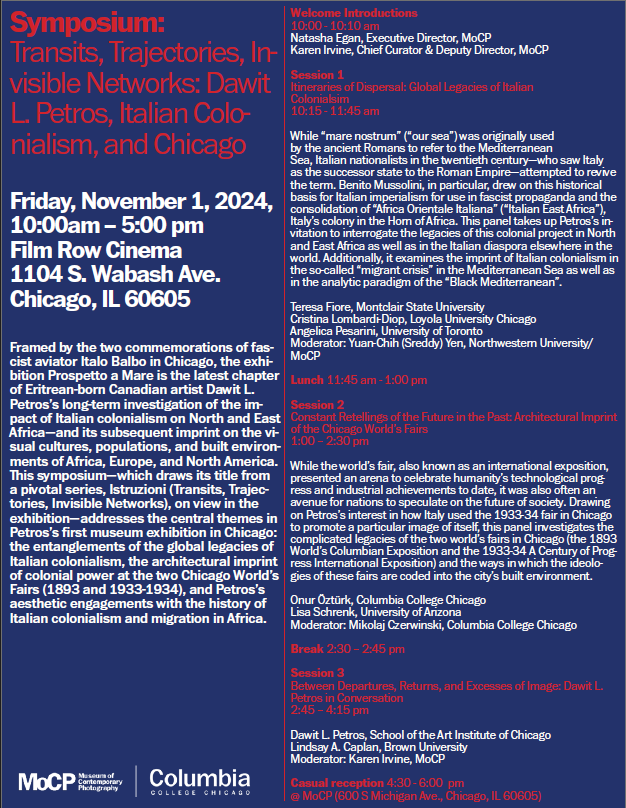
Dawit L. Petros: Prospetto a Mare
Curatorial assistant
Museum of Contemporary Photography at Columbia College Chicago
August–December 2024
Supported curator with drafting wall texts and exhibition installation, co-organized scholarly symposium Transits, Trajectories, Invisible Networks: Dawit L. Petros, Italian Colonialism, and Chicago, and assisted with copy-editing of accompanying catalogue publication as well as planning and executing of related public programs.